

Eli Vieira Warns from Exile: Don't Let Them Take the Rule of Law Like They Did in Brazil
A fresh recipient of the Free Speech Courage Award, the journalist describes what is happening in the country he was forced to flee.

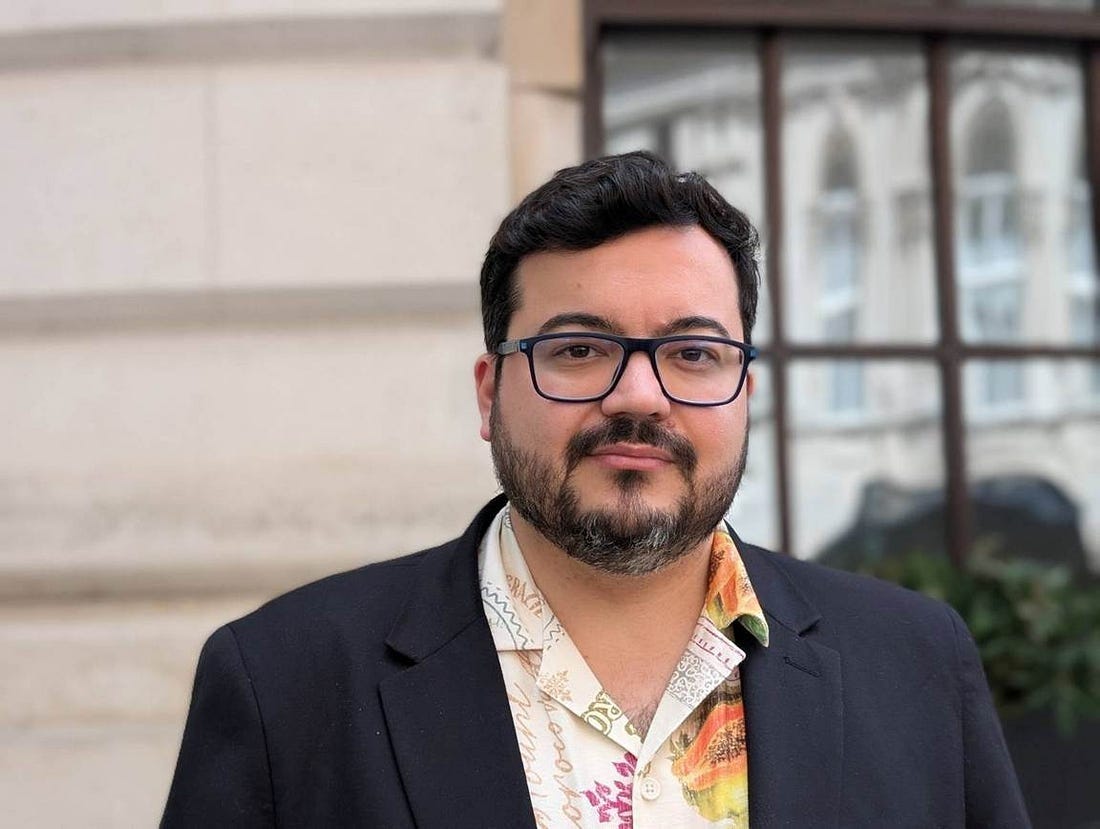
Cecílie Jílková is a Czech writer and journalist, daughter of dissidents Ludvík Vaculík and Lenka Procházková, who lived and worked under communist rule. She edits and contributes to Reportéři on-line, an independent publication on Substack.
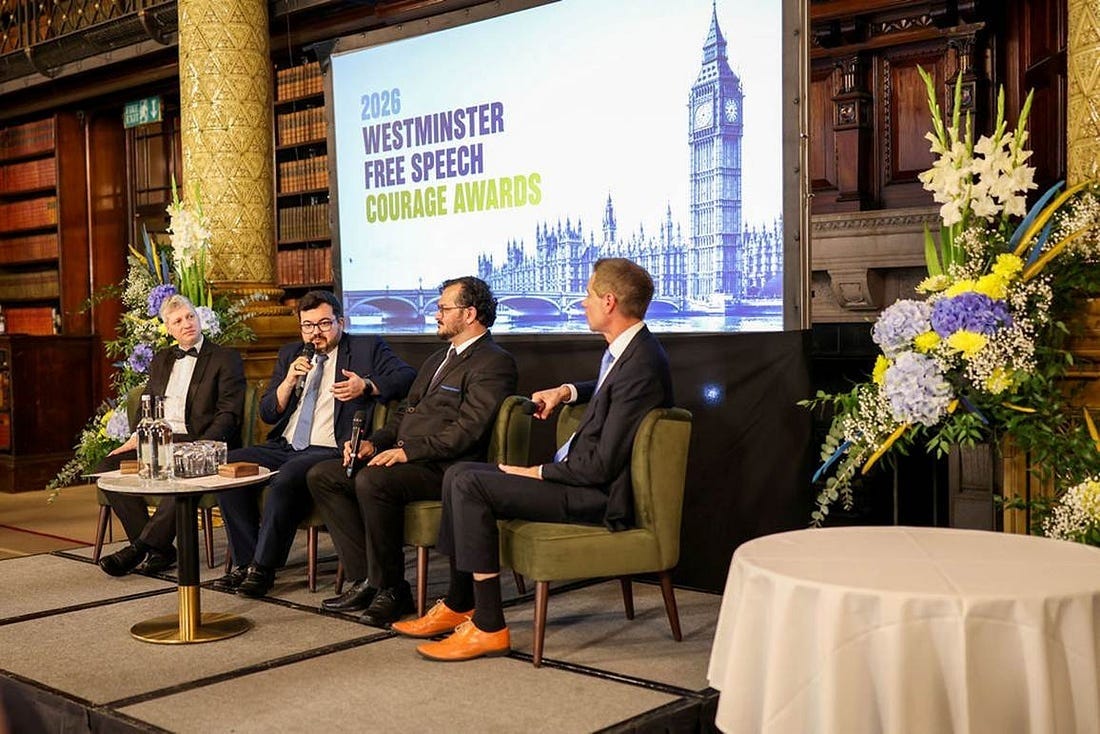
We reproduce below, with her kind permission, her interview with Eli Vieira — recipient of the Free Speech Courage Award, an award presented to him in London on June 18 by the Free Speech Union, a free speech advocacy organization founded in the United Kingdom.
In August 2025, Vieira and his colleague David Ágape (whom we interviewed in July 2025) revealed that Brazilian citizens had been imprisoned for their social media posts in the aftermath of the January 8, 2023 riots, when Bolsonaro supporters stormed government buildings in Brasília. After exposing that Supreme Court Justice Alexandre de Moraes had repurposed the national biometric database to cross-reference detainees’ identities with political opinions they had expressed online years earlier, both journalists fled Brazil.
Are journalists and citizens truly free to speak their minds? In Brazil, the answer is no. "Brazil is a juristocracy," David Agape told us last July. In Europe, we are not there yet. But the temptation to tighten controls and curtail freedoms is unmistakable, as the groundwork is quietly laid for what could become a fully-fledged architecture of censorship. For that reason, warns Eli Vieira, Brazil's trajectory should serve as a wake-up call.
A June study by the Reuters Digital News Report showed a further decline in trust in media across many countries. In Brazil, trust has fallen to a twelve-year low. This decline is happening in parallel with the retreat of Brazilian democracy and the rule of law.
In August 2025, two investigative journalists, Eli Vieira and David Agape, documented how Brazilian citizens were imprisoned for their social media posts. Last week, they received the Free Speech Courage Awards in London. Both journalists now live in exile.

You are accepting an award in London, but you cannot go home with it. What happened and why did you leave Brazil on November 12 last year?
It all started when in August 2025, together with my friend and journalism colleague David Agape, I showed that Brazilian citizens had been kept in prison for their social media posts. The events took place between January and March 2023.
What exactly happened?
Some Brazilian citizens took part in the January 8 riots, when hundreds of mostly right-wing supporters of former President Jair Bolsonaro, unhappy with his narrow election defeat, stormed the Square of the Three Powers in Brasília and smashed windows and valuables in three buildings: the Presidential Palace, the Supreme Court (STF), and both chambers of Congress.
Others had set up camps on public grounds near military installations, such as the Army Headquarters, months earlier. These camps were considered peaceful demonstrations even by military officials, and most people from the camps did not take part in the January 8 riots.
The vandalism was obviously wrong, but the reaction of the STF and the Superior Electoral Court (TSE) was worse. Citizens were arrested en masse and subjected to trials that followed a uniform script, without attention to what each individual had actually done.
The main judge overseeing all cases was TSE President Alexandre de Moraes. He acted very fast. Right after the riots, on January 10, he issued a decree in the government gazette branding the protesters as “terrorists.” In the following years, he was the main judge sentencing these people to prison.
For example, hairdresser Débora Rodrigues dos Santos was sentenced to 14 years in prison for, among other things, “violent overthrow of the democratic rule of law” and a “coup.” Materially, however, all she did was write in lipstick on the statue of Justice outside the STF building: “You lost, you fool.”
After two years, her sentence was commuted to house arrest so she could be with her small children. If only Cleriston Pereira da Cunha had received the same leniency — another protester who suddenly died in prison. His lawyers had been warning the judges about his health problems in vain.
Judge Moraes also misused Brazil’s largest biometric database to verify the identities of detainees while screening their political opinions on social media. The evidence was provided to us by IT specialist Eduardo Tagliaferro, who became our primary source. After the publication of our story, he fled to Italy and at a Senate hearing apologized for helping Moraes carry out his persecution.
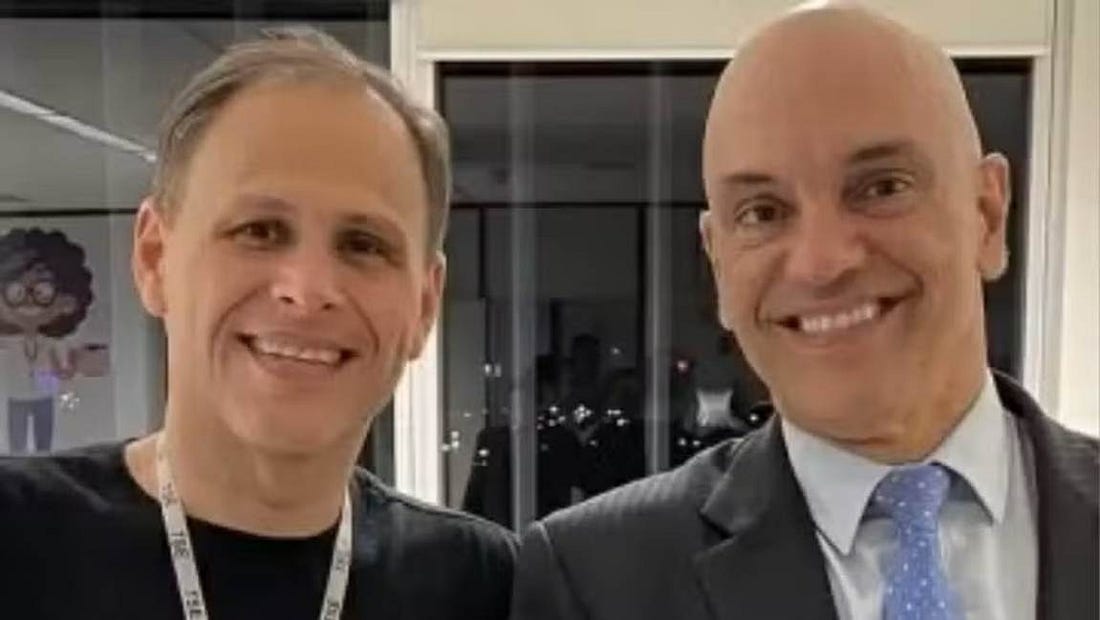
The data we obtained comes from Tagliaferro’s phone. The court officials’ workflow was as follows: first, they obtained — also through unofficial channels — a list of nearly 2,000 names from the police who had arrested the detainees. Then they searched for the names on social media and in the biometric database to confirm identities. If a given detainee had tweeted anything against President Lula and his party, even years earlier, they were issued a “positive protocol” — essentially a cadre profile marking them as an enemy of the new government, and for this reason such a detainee remained in “preventive custody.”
This was, for instance, the case of street vendor Ademir Domingos Pinto da Silva, whose protocol contained only tweets from 2018. Silva was not even a clear-cut Bolsonaro supporter, as he also tweeted critically against Bolsonaro’s politically active sons. But that was not included in the protocol.
Tagliaferro also published a list of people he accused of helping add citizens to blacklists intended for censorship. One of the people involved in this censorship was former government official Letícia Sallorenzo, known for her ostentatious adoration of Moraes.
This official filed a criminal complaint against us last October, addressed directly to Moraes’s office. This is essentially illegal, because ordinary citizens are tried by lower courts. Instead of dismissing it outright as the law would have him do, Moraes accepted the complaint and asked the prosecutor general for an opinion. The prosecutor’s deadline was November 12, 2025.
That is the date when you and your colleague David Agape fled Brazil, correct?
Yes. Agape and I already knew about the cases of journalists persecuted by Moraes. Jackson Rangel spent over a year in prison. Oswaldo Eustáquio was granted asylum in Spain. We were next in line.
The lawsuit against you was archived this January at the prosecutor’s request.
Yes. After three months of wreaking havoc in our lives by delaying his official opinion, the prosecutor general said the case had no merit and must be archived. Moraes did not fight him on this, which was in our favor.
Why was the case archived?
I can only speculate, but I see two main reasons. First, Tagliaferro was the third defendant in the case, but the prosecutor general had already issued an opinion in a separate case accusing this whistleblower of crimes against the Brazilian state for leaking the information we published. A second prosecution against him would have been excessive.
The second reason is that they may have already been informed of our departure and did not want to give us another argument when telling the US and UK governments that Brazil persecutes journalists. Moraes cares about his image in the media.
So is it safe for you in Brazil now?
I don’t think so. Also for two reasons. The oldest STF justice, Gilmar Mendes, who has mostly defended Moraes’s actions and is highly politically active, recently reopened another already-archived case because it was politically convenient. This shows that our case can also be reopened at any time.
Second: I spoke with a Federal Police officer when consulting with family, friends, and employers about whether I should leave Brazil. This officer said there was no way for me to find out if I would be allowed to leave the country. I would only find out at the moment I presented my passport at the border gate before boarding the plane to London. Persecution happens covertly — you learn about it at the last moment.
The STF and Moraes have kept open for seven years the so-called “Fake News Inquiry.” People can be investigated without knowing it. It is a permanently and preventively open investigation for events that have yet to happen. An investigation targeting the future. An absolutist instrument that gives Moraes and his allies more power than the Constitution ever granted them.
Sallorenzo’s criminal complaint asked Moraes to add our names to this inquiry. And we have no way of verifying that he didn’t.
What about the people you wrote about? According to your data, not a single person with a negative “cadre profile” has been released to this day, is that correct?
Since we only had access to 67 protocols covering just 23% of the total 1,398 names screened by Tagliaferro and his team, we don’t know what kind of profile was issued for some people. However, we do know that some people fled the country.
Moraes then turned against those who stayed in order to retaliate against those who fled. He sent back to prison even sick elderly women who had been serving their sentences under house arrest, such as Vildete Guardia and Iraci Nagoshi. He only reversed this decision after public outrage over their health. He doesn’t want to damage his PR if someone else were to die in prison.
The latest Reuters Digital News Report says that Brazilians’ trust in media has dropped even further and is now at a twelve-year low. How do you see the future of Brazilian media?
I once read an article on Bari Weiss’s The Free Press about the conflict in Gaza on exactly this topic. The article said that Gazans and Israelis no longer rely on media brands. Only on individual journalists. On those with a reputation for telling the truth. Brazil is not a war zone, but that is an apt observation.
I work for Claudio Dantas, a journalist who built a strong reputation on both reporting on human rights abuses during the military dictatorship (1964–1985) and on corruption scandals under previous Lula governments. People trust individual figures like him.

In some cases, newspapers create so-called “blogs” for such figures, ostensibly to give these highly valued journalists editorial independence. At the same time, however, the label “blogger” makes it easier to persecute these journalists. If we’re not real journalists, just bloggers, the subtext is that it’s okay to go after us.
You are essentially describing a system in which power structures, through pressure on newspapers, decide who gets the status of journalist and who doesn’t. Where is this all heading? President Lula publicly asked Chinese leader Xi Jinping to send advisors on internet regulation. What is the goal?
The goal is the October elections. The entire model of censorship as an alleged “shield of democracy” will be tested again in Brazil during the next elections. The Washington Post called Brazil a global laboratory for this kind of test. The American left endorses the persecution of those detained on January 8 and claims the protests were motivated by “disinformation.”
The unit that carried out the cadre profiling of detainees on Moraes’s orders was also established in the name of fighting “disinformation.” Incidentally, in Portuguese, “disinformation” and “misinformation” are the same word. The consequence is that intent doesn’t matter. The state has appointed itself not only as the arbiter of truth but also as the editor of your political beliefs.
Yet according to the Reuters study, Brazil is the only country out of 48 markets where concerns about disinformation have declined.
I’m used to this kind of studies about Brazil. To put it cynically: for some international observers, everything is fine in Brazil when left-wing politicians are in charge. When a right-wing leader is in power, then all rights are under threat. In 2018, the left claimed Bolsonaro would cause a genocide of the LGBT community. I am married to a man. Our union is recognized by a Brazilian court. And we are alive.
Perhaps the Reuters Institute relies too heavily on Brazilian mainstream media (paid with money from Lula’s Communications Secretariat) and on Brazilian academics who are overwhelmingly biased against anything that looks right-wing.
That said, I’m not saying the study’s conclusions are wrong. Perhaps the “fight against disinformation” fad is simply fading in Brazil because it has already been successfully used to imprison Jair Bolsonaro and many of his supporters for an alleged coup attempt.
At the conference in London where we are meeting, European regulations and their impact on freedom of speech were discussed. Do you see parallels with developments in Brazil?
Not just parallels — I see a direct influence of the DSA on Brazilian moves toward censorship. The DSA speaks of “trusted flaggers,” and the TSE has already used them — mostly left-leaning fact-checking agencies — during the 2022 elections to remove content from social media. The DSA also speaks of “systemic risks” — Lula used very similar language in two censorship decrees he issued in May.
What would you say to a Czech reader who asks why they should care about a story from a country on the other side of the world?
I hope Czechs reading this will realize that the rule of law is a fragile thing that can be broken by powerful forces — especially those perceived as bearers of legal expertise. These can be very dangerous when they come for free speech and the rights of ordinary citizens.
I also hope that Czechia has done a better job than Brazil in establishing rules that prevent people in high positions from making decisions based on their own whims and prejudices, especially political ones.
Brazilian democracy is renewable, but only if the separation of powers is restored and judicial activism is tamed.
One more thing: only Brazilians care about Brazil enough to do something about it, and only Czechs care about Czechia enough to keep it open and free. Don't expect saviors from abroad. Take your freedoms into your own hands before the state — or in your case, the state above states — takes them from you.
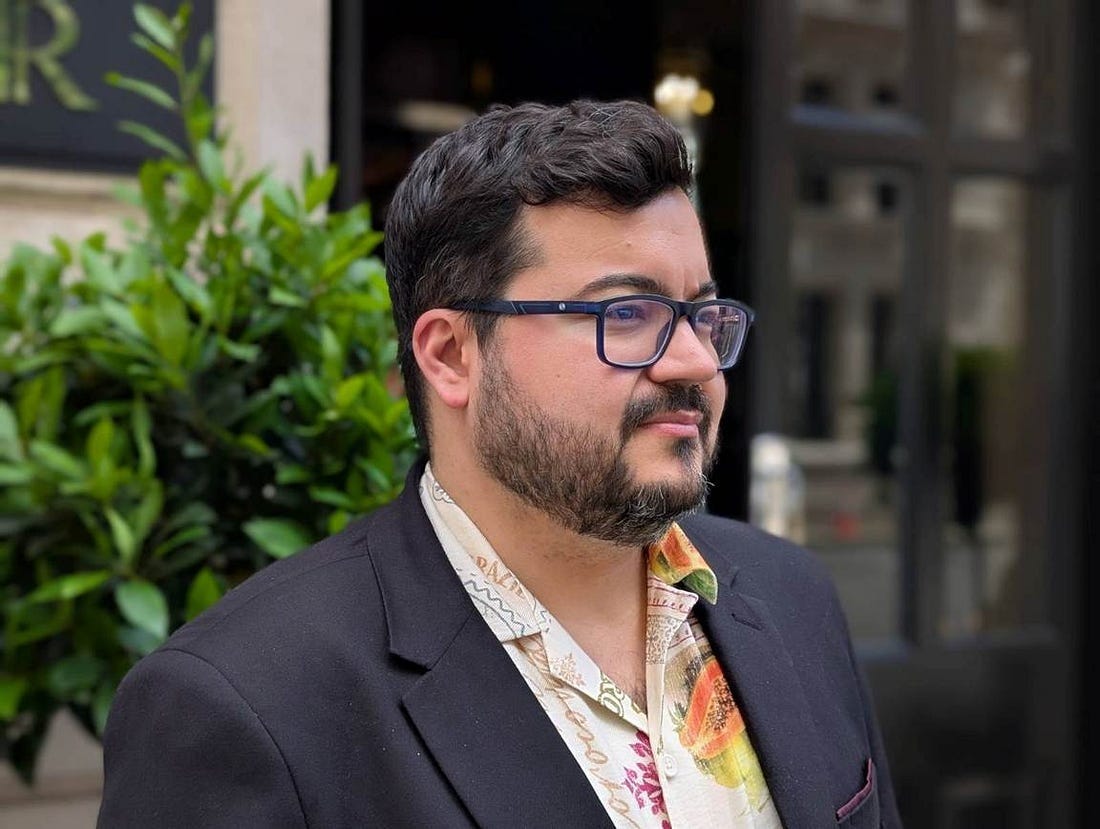
Eli Vieira is a Brazilian journalist, biologist, and geneticist, president of Free Speech Union Brasil, and co-author of the investigative reports Vaza Toga 2 and Twitter Files Brazil. He has been living in exile since November 2025.
 | Un article invité par
|