

[ Editorial ] Toward a Cordon Sanitaire Around Israel
A war too many — for the United States, but above all for Israel, which must — and will — be firmly reined in.

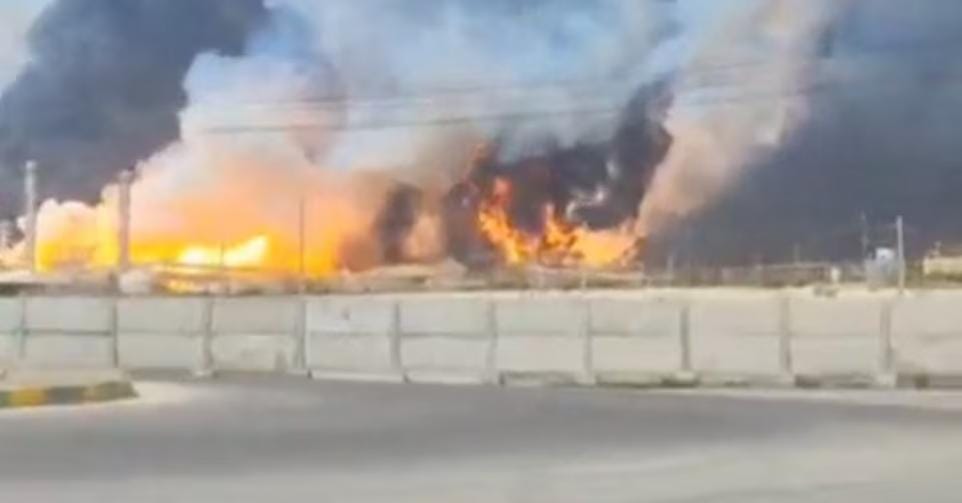
If there is one lesson to be drawn from the past five years, it is this: never entangle yourself in a neighbor’s conflict unless you are offering mediation. Ukraine made that clear. All of Europe allowed itself to be dragged by Washington into a proxy war whose real purpose was to permanently sever the continent from Russia — cheifly from its cheap, reliable energy. We are now paying the exorbitant price, and those who fell into that trap, who gutted European economies in the process, will have to answer for it.
Donald Trump has now leapt headfirst into the snare set by Israel, triggering a war that is illegal under both American and international law. On March 18th, under oath before Congress, Tulsi Gabbard stated plainly: Iran does not possess the means to build a nuclear weapon.
Joe Kent — who resigned two days ago from the leadership of America’s counter-terrorism apparatus — confirmed in an interview with Tucker Carlson that Iran posed no imminent threat to the United States. This man sat at the apex of American intelligence. He does not speak carelessly.
He describes the Israeli playbook with precision: officials present fabricated intelligence, outright lies, to the White House. These fabrications are then simultaneously amplified by Tel Aviv’s media mouthpieces — Fox News, the New York Times, CBS, The Free Press, and the rest.
Day after day, every argument put forward by the White House crumbles. And the American people will not forgive Trump for starting yet another war — betraying his campaign promises — and worse, for losing it.
The fable endlessly recycled in mainstream media — that Arab states want to see the end of the Iranian “regime” — is just that: a fable. Not only do these countries, the Gulf monarchies chief among them, now regard Israel and the United States as the primary agents of chaos in the region, they watch with dismay and dread as Israelis systematically assassinate every potential interlocutor of a “regime” that refuses to collapse. With whom, exactly, does anyone plan to make peace?
Persia, civilization of three thousand years, will not disappear. Iran is a civilizational state. The Arab world knows this. Washington and Tel Aviv have placed these countries on the front line without their consent. One can reasonably conclude that this war will end on the day the last American soldier leaves the region.
And since the Iranians are fully aware that Israel's objective is the destruction of Iran as a civilization-state, they will fight to the last — because for them, this war is existential. For the Americans, it is not. And they are not seeking Iran’s obliteration.
Badr Albusaidi, Oman’s Foreign Minister and lead mediator in US-Iran negotiations, writing in The Economist, goes further: he observes that the United States has lost control of its own foreign policy, and that America’s friends must now help it correct course. The implication, delivered in impeccably diplomatic language, is clear: what Albusaidi is proposing, is a cordon sanitaire around the Hebrew state — the principal destabilizing force in the Persian Gulf and the wider Middle East.
He does not mince words:
“The American administration’s greatest miscalculation, of course, was allowing itself to be drawn into this war in the first place. This is not America’s war, and there is no likely scenario in which both Israel and America will get what they want from it. Hopefully America’s commitment to regime change is just rhetorical, whereas Israel explicitly seeks the overthrow of the Islamic Republic and probably cares little about how the country is governed, or by whom, once this has been achieved.”
And further:
“The question for friends of America is simple. What can we do to extricate the superpower from this unwanted entanglement? First of all, America’s friends have a responsibility to tell the truth. That begins with the fact that there are two parties to this war who have nothing to gain from it, and that the national interests of both Iran and America lie in the earliest possible end to hostilities. This is an uncomfortable truth to tell, because it involves indicating the extent to which America has lost control of its own foreign policy. But it must be told. (…)
It may be difficult for America to return to the bilateral negotiations from which it was twice diverted by the temptations of war. It will certainly be difficult for the Iranian leadership to return to dialogue with an administration that twice switched abruptly from talks to bombing and assassination. But the path away from war, hard though it may be for both parties to follow it, may have to lie through precisely this resumption..”
Donald Trump still does not appear to grasp the full dimensions of the situation for which he — together with Benjamin Netanyahu — bears ultimate responsibility. In the same breath, he forbids Israel from striking the South Pars gas field again, while threatening Iran with obliterating that very field should Tehran dare to retaliate against American aggression — part of which is being conducted from a base on Qatari soil.
