

Future of Ukraine’s Army: A Zugzwang for the EU
Opinion Piece – The EU’s Self‑Inflicted Stalemate Over Reintegration of Ukrainian Soldiers After Peace

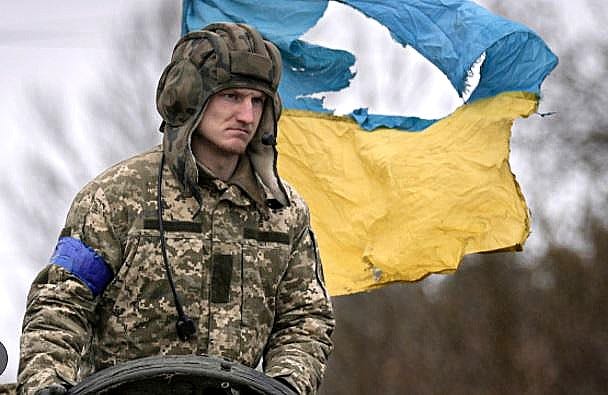
As peace talks to end the Ukraine war proceed without any European involvement—Russia refuses to sit down, and Washington is fed up with the endless roadblocks from the so‑called “volunteer coalition”—the fate of Ukraine’s army becomes the central issue. Russia has always treated Kyiv’s NATO aspirations as a red line. Since the launch of its “special operation,” Moscow’s primary goal has been to cripple Ukraine, chiefly by throttling its military capabilities.
Enter Oleg Nesterenko, a Paris‑based veteran of two decades, now heading the European Trade and Industry Center (CCIE). A former MBA director and master‑class professor at elite business schools, Nesterenko offers his take on the matter.
The author’s statements are solely his own and do not represent the views of L’Eclaireur. Nonetheless, we have deliberately chosen to give him a platform in the interest of pluralism and a deeper understanding of the world.
By Oleg Nesterenko.
The term zugzwang describes a chess position where any move worsens the player’s standing. That’s precisely the dilemma Europe faces in the unofficial peace talks between the NATO bloc and Moscow: the size of Ukraine’s post‑war armed forces has become a linchpin of the deadlock, with the “war‑ready” Europeans lurking in the background.
I won’t dissect every clause of a prospective treaty; instead, I’ll focus on the raw numbers that the Western media’s propaganda machine conveniently glosses over.
Numbers that Matter
Official estimates of Ukraine’s active personnel swing wildly between 800,000 and 950,000, but these figures hide a staggering 200,000–300,000 deserters, according to Ukrainian sources. Subtracting the desertions leaves a realistic headcount of 500,000–750,000, of whom roughly 200,000 are actually fighting on the front lines.
Washington’s peace blueprint calls for a 600,000‑strong Ukrainian army, while the EU pushes for around 800,000 troops. Both proposals sit squarely within the “bargaining range” that the mainstream press barely mentions.
Why the Focus on Troop Levels Is Misplaced
Before the Russian invasion, Ukraine’s armed forces numbered about 200,000 active duty soldiers—already inflated by the Donbas conflict that began in 2014. By contrast, the largest EU militaries—France and Poland—hover near the same figure. In peacetime, expanding those forces to 300,000 would cripple already fragile economies teetering on recession.
Ukraine, meanwhile, is spiraling into a deep, structural economic and demographic collapse. It cannot sustain an 800,000‑man army, let alone the 200,000‑person peacetime establishment it once had. Post‑war, the country will be mired in a prolonged recession, and European taxpayers will be forced to fund Kiev with tens of billions of euros annually.
The Ukrainian Trap
NATO‑aligned propaganda paints a future Ukrainian army as a cornerstone of European defence. Reality check: no European government, however anti‑Russian, will willingly sacrifice substantial resources to keep a foreign force alive beyond its immediate utility as a “strategic consumable” against Russia.
Once the conflict ends, the under‑funded Ukrainian military will likely be abandoned, unable to secure the multi‑billion‑euro yearly budgets required to maintain declared capability levels. Yet Europe cannot simply shut the door on Ukraine without turning it into a pariah state—something Brussels is loath to do. Closing the border would be politically impossible for even the most sovereignist, anti‑Ukrainian regimes.
The Human Cost
A frontline Ukrainian soldier now earns ≈ 2 000 € per month (over 100 000 hryvnia), roughly five times the pre‑war average civilian wage of ≈ 434 €. Hundreds of thousands of combatants will return to a shattered economy, facing precarious jobs paying only a few hundred euros a month. Surveys already show that many of these battle‑hardened individuals will seek the higher salaries offered by the EU—by any means necessary, including crime and violence.
European capitals thus face a stark choice:
Continue massive, sustained funding of Ukraine’s army and economy, accepting the fiscal burden.
Open the floodgates to tens of thousands of disaffected, well‑paid ex‑combatants, risking social instability.
Marginalise Ukraine, seal its borders, and abandon the very people Europe has been financing.
Given Brussels’ track record and the elite’s aversion to the second scenario, the “least‑evil” path appears to be continued, hefty subsidies to Kiev.
The Real Motive Behind the Outrage
European leaders’ theatrical fury over Trump’s proposal to trim Ukraine’s forces to 600,000 is a thinly veiled illusion. The true aim is to stall any peace agreement, prolonging the war just long enough for the EU to overhaul its own militaries—paying the price in socio‑economic sacrifices that its citizens will bear, voluntarily or not.
In short, the EU is caught in a classic zugzwang: every move either drains its coffers further or hands Europe a new security headache. The board is set; the pieces are moving, and Europe has already lost.