

[ Iceland ] The EU Referendum: Our Currency, Our Resources, and the Loud Silence on Fundamental Rights
On 29 August 2026, Icelanders will go to the polls and answer a simple question: Should negotiations on Iceland’s accession to the EU be resumed?

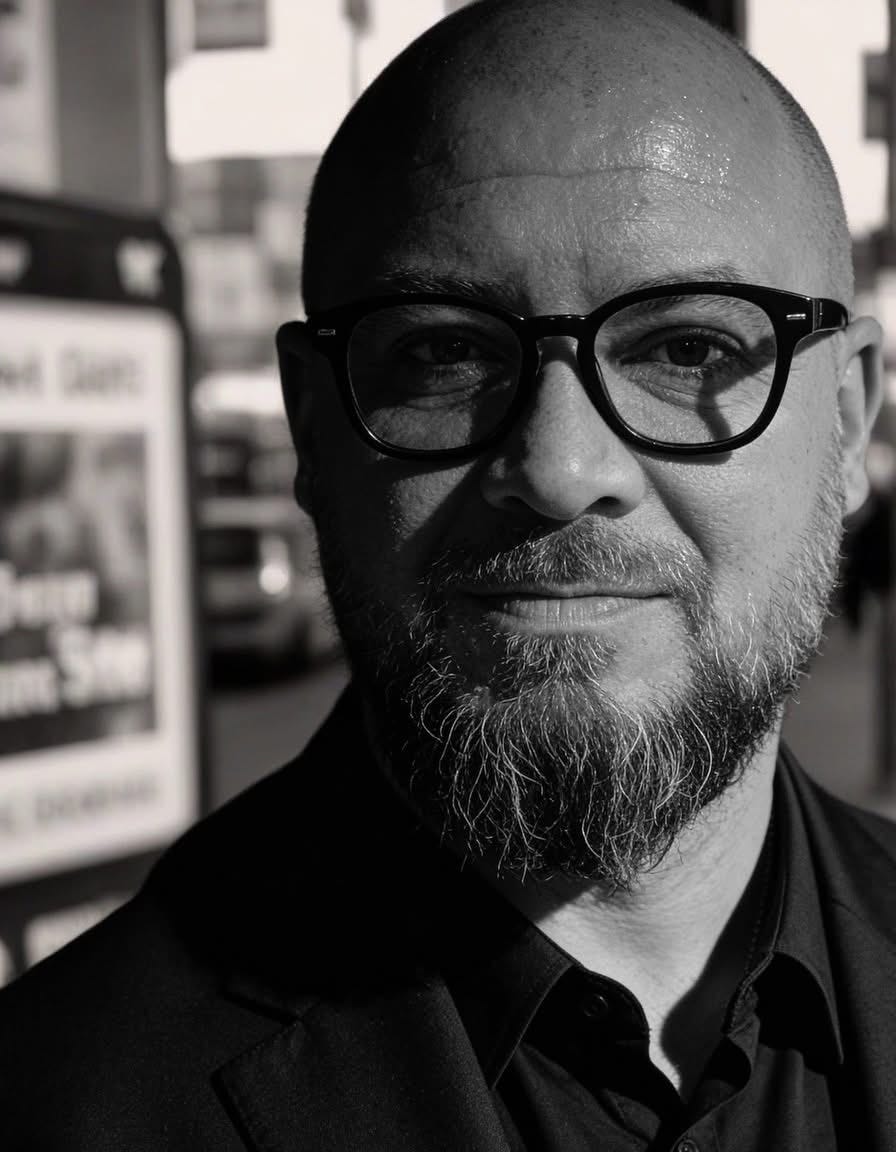
Eldur Smari Kristinsson is an Islandic politician. He ran for the Democracy Party in the Northwest constituency of Iceland in the last parliamentary elections.
Iceland applied for EU membership in July 2009 after the financial crisis. Negotiations opened in 2010 and advanced rapidly thanks to its European Economic Area membership.
In 2013, a new eurosceptic government froze the talks. In March 2015, Foreign Minister Gunnar Bragi Sveinsson sent a letter to the EU stating Iceland no longer wanted to be considered a candidate country.
For Iceland, the letter was a withdrawal. However, the EU claims the application was never formally withdrawn and remains legally valid and dormant.
In January 2025, an EU spokesperson confirmed: “Iceland’s membership application is still valid; it was never formally withdrawn, so legally, it remains active.”
After the 2024 general elections, the new government revived the issue. A referendum is now scheduled for 29 August 2026 on whether to resume negotiations.
The EU has stated it is ready to restart talks if Iceland votes yes.
No domestic agenda
According to our law on referenda, this poll is advisory — yet the government claims it provides a mandate to continue aligning with the EU alongside the negotiation process. It will establish whether we want to take the next step toward becoming part of a political union that has never been as close to falling apart.
What makes this referendum quite out of the ordinary is that there is neither a popular majority nor a parliamentary one for joining the European Union.
This is not a domestic agenda. Icelandic politicians are puppets on a string - and the strings are being pulled from abroad.
Yet the debate that has taken place so far reads like a manual on how to avoid the real questions. It has mostly revolved around our currency, interest rates, and economic “stability.” Supporters of membership promise lower interest rates and the euro as a magic solution. Opponents point to the volatility of the króna and fear the loss of an independent monetary policy. Both sides speak as if EU membership were primarily a technical economic matter that would solve domestic problems.
This is misleading. Interest rates in Iceland are first and foremost the result of domestic governance — fiscal policy, inflationary pressures, and decisions by the Central Bank of Iceland. EU membership does not change the fundamental fact that governments can continue to spend more than they take in, or that the Central Bank can continue to respond to the consequences with high interest rates.
If the government has given up on tackling these issues responsibly at home, Brussels will not solve them. It will merely shift the responsibility elsewhere — while simultaneously reducing Icelanders’ ability to correct the course through elections.
The Democracy Party advocated specific solutions for Icelandic households by removing the housing component from the consumer price index, abolishing indexation of lending and mortgages, and imposing a cap on the Central Bank’s interest rates. These measures have never been properly tested.
Even less attention has been given to the ceding of sovereignty over natural resources. Fisheries are a cornerstone of Iceland’s economy and national identity. The EU’s Common Fisheries Policy has proved difficult for many coastal states — quotas, allocation, and oversight shift to Brussels and Luxembourg. Energy, agriculture, and the use of natural resources are also at stake. These are not side issues. They are questions about who owns Iceland — the nation or joint institutions operating under rules over which Icelanders have little say.
Pressure on civil rights
What is most absent from the debate is the truly profound question: What happens to our fundamental civil rights?
Democracy, freedom of expression, and the right to privacy are not self-evident. They have evolved continuously in the West — but not always in the right direction. In recent years, the EU has developed tools presented as safeguards for democracy that can, in practice, serve to restrict it.
Examples include the so-called European Democracy Shield and the Centre for Democratic Resilience. These ideas are framed as a response to foreign influence, disinformation, and “threats to democracy.” They are supposed to pool information, build capacity to detect and counter “undesirable” narratives, and strengthen the “resilience” of democracy.
This sounds noble. In reality, the danger is that such institutions will be used to define what counts as a legitimate opinion and what does not — often based on whether it aligns with Brussels’ policies and narratives. When unelected institutions are given the power to “defend” democracy against elected representatives and voters who hold different views, democracy itself is at risk.
This is not an isolated phenomenon. It is part of a larger and more systematic network often described as the NGO industrial complex and the censorship industrial complex. The EU has built an extensive system for funding non-governmental organisations (NGOs) that function as influence agents, lobbyists, and “representatives of civil society.”
These organisations receive grants from the Union’s common funds to work on issues such as migration, climate policy, digital governance, and “social justice.” They participate in consultations, shape proposals, and present themselves as an “independent” voice — even though their funding and incentives are closely tied to Brussels. This creates an industry in which organisations multiply, receive more money, and continually generate new “challenges” that require more intervention and funding.
At the same time, a censorship industrial complex has emerged in which governments, publicly funded fact-checking organisations, academia, media outlets, and tech companies collaborate to define, label, and restrict “disinformation” and “hate speech.”
Rules such as the Digital Services Act (DSA) and the Code of Practice on Disinformation have strengthened this cooperation, giving “trusted flaggers” and partner organisations privileged influence over what appears online.
The European Democracy Shield and the Centre for Democratic Resilience are directly linked to this network. The document establishing them refers to a “stakeholder platform” in which civil society organisations, fact-checkers, and media providers are to participate.
In this way, the EU’s official tool becomes part of the same industry that already operates under the banner of fighting “threats.” The result is a system in which power shifts away from voters and national parliaments toward funded organisations and informal networks that have a strong incentive to maintain and expand their own existence.
When “threats to democracy” are defined by those who receive funding from the very system they are supposed to defend, the danger is obvious: legitimate criticism of any EU policy, immigration, or centralisation can be labelled as “disinformation” or “foreign interference”, and thereby silenced — without voters having any direct say in the matter.
Silence on both sides is deafening
Why does either side in Iceland discuss this openly? Supporters of membership prefer to talk about economic benefits and “European cooperation.” They know that any debate about this industrial system, centralisation, and restrictions of freedom of expression frightens people. Opponents to EU Membership have focused on traditional sovereignty issues — fisheries and independence — but have avoided digging deeper into how the EU has evolved into a system capable of limiting even the rights it claims to protect.
Both sides of the board appear to agree on keeping the debate on the surface: money and quotas, but not the question of who actually has the right to decide what may be said, what may be known, and how democracy should function.
Icelanders have long prided themselves of a strong democratic tradition, freedom of expression, and respect for privacy. These rights are not guaranteed in a large, centralised union where decisions are increasingly moved further away from voters and where EU funded organisations and censorship systems can wield more influence than elected representatives.
If we are to take a position on EU membership, we should discuss these matters honestly — not only what we gain in our pockets, but also what we give up of what makes us a free nation.
The 29 August referendum is not about the euro. It is about whether we want to continue debating our future on our own terms — or whether we want to hide key issues behind economic promises and a system that restricts our freedom. Democracy begins with asking all difficult questions. Now is the opportunity to do so.
 |
|