

They’re Trying to Ban VPNs? A 30 Minutes Workaround
The EU’s latest push to regulate VPNs encapsulates the sclerotic mindset of Brussels’ eurocrats: desperate to control what they no longer understand.

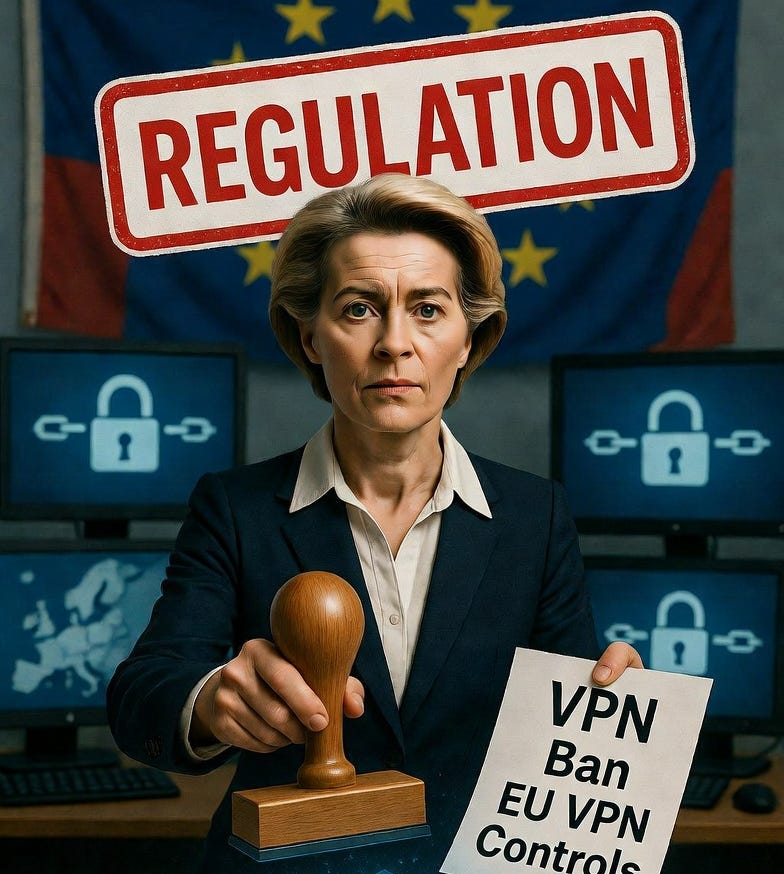
A Virtual Private Network (VPN) creates an encrypted tunnel between your device and the internet. Not only is it impossible to control this technology effectively, it is actively undesirable — because robust encryption and privacy tools are foundational to security. VPN were invented so that no one could snoop on or intercept your traffic. Masking public IP adresses is also a critical security feature.
Blocking all known VPN and proxy IP addresses is technically futile. Providers constantly spin up fresh addresses, and no exhaustive list or central registry has ever existed. That very fluidity — the rapid rotation of public IPs — is a core security feature of VPNs, not a bug.
Take the recent Utah law that bans minors from using commercial VPNs and stipulate that a user is “accessing from Utah” if they are physically present there, regardless of any VPN, proxy, or obfuscation tool. This is perfectly absurd. It requires authorities to prove the user’s physical location at the exact moment of connection — while simultaneously stating that anyone physically in Utah is subject to Utah law. The notion that a digital offense committed in Utah via a server in another state or country magically does not “occur” in Utah only underscores a severe legal and technical incoherence.
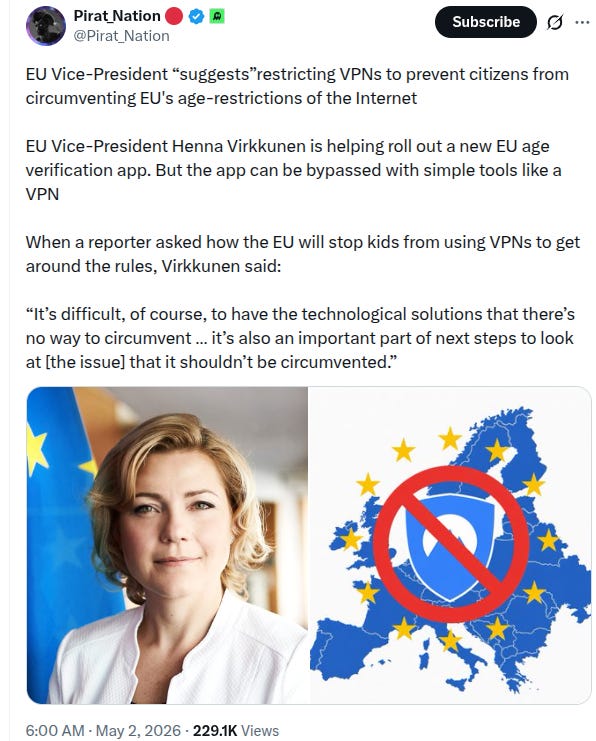
This is the perfect demonstration of the emptiness of all technocratic power plays: frantic attempts to regulate what cannot be regulated, control what cannot be controlled, and legislate into submission. The eurocrats (and their American imitators) aren’t safeguarding anyone. They’re simply revealing their own irrelevance in the face of technological reality.
