

The Second Twelve-Day War
A recap of our articles covering the debacle that is the unprovoked war of aggression waged by Israel and the United States against Iran.

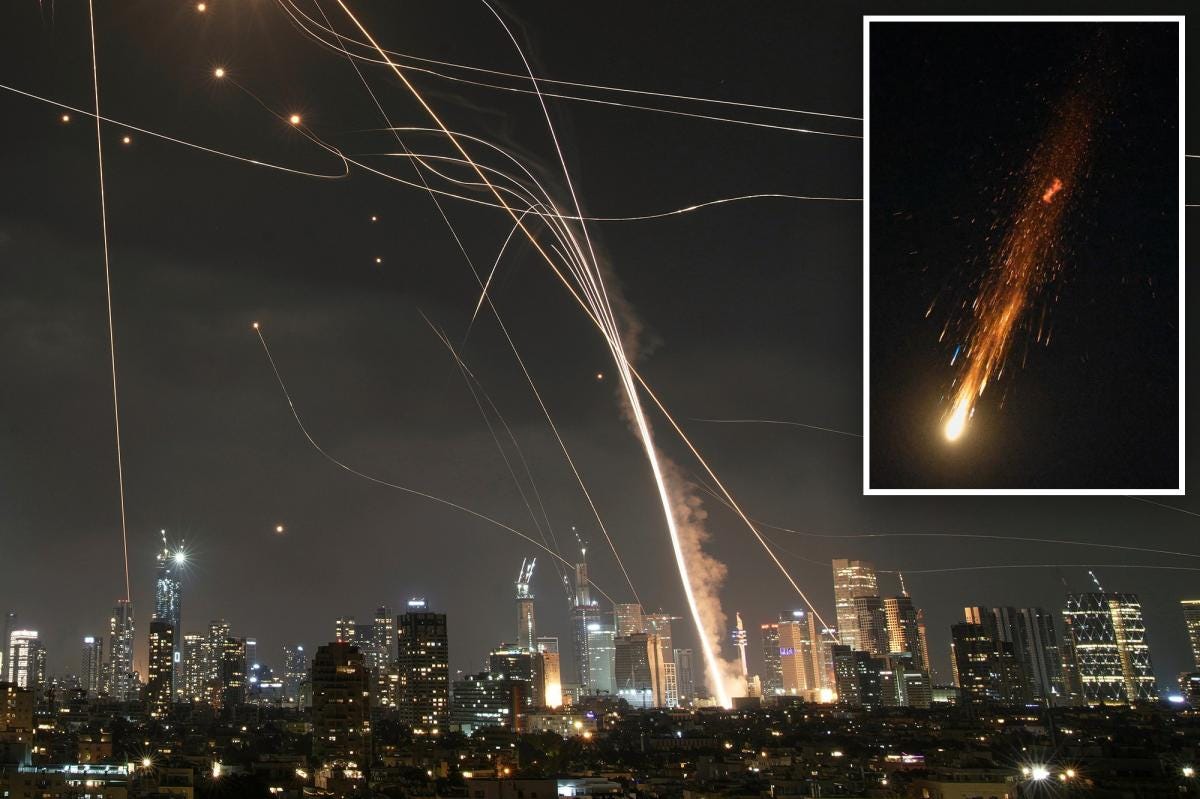
Washington and Tel Aviv have been war-gaming an attack on Iran since the fall of the Berlin Wall. In the first six days of strikes alone, the United States burned through more than $6 billion in munitions and reportedly spent a staggering total of $11.3 billion. The return on that investment: zilch. The “decapitation strikes” targeting the Iranian leadership neither broke Teheran’s will to fight nor degraded its military capacity by any measurable degree.
Iran, for its part, had not been idle. For years it built a strategy around asymmetric warfare — long-range conventional strike capabilities (ballistic missiles and drones), a decentralized command structure with 31 independent entities each authorized to strike Israeli territory and American or energy infrastructure across the region as they see fit. In Clausewitzian terms, the structural superiority of the defense, combined with initiative at the command level: a formidable combination.
Then there is the arithmetic. An Iranian ballistic missile costs between one and two million dollars. A suicide drone, between twenty and fifty thousand. Interceptors — of which at least two must be fired per incoming threat to have a reasonable chance of success — cost orders of magnitude more. So do American long-range strike munitions. And the United States lacks the industrial base to replenish what it has expended.
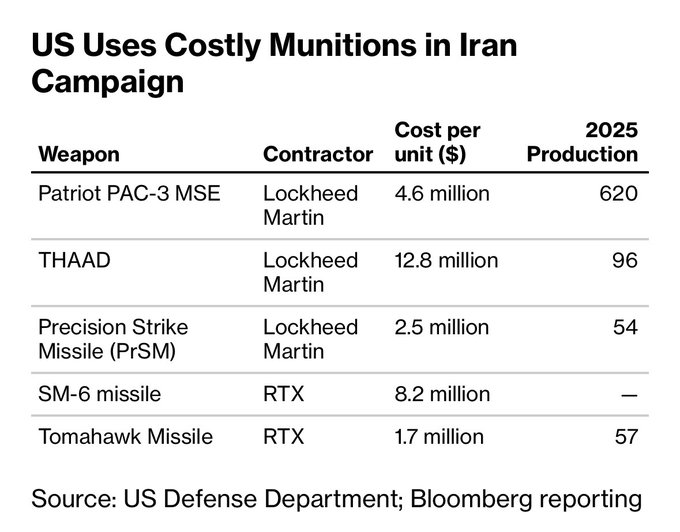
This war is being waged for Israel’s benefit alone — and it will be Israel that bears responsibility for the severe global economic downturn now taking shape. It was Netanyahu, with his zealots Jared Kushner and Steve Witkoff, who spent December 2025 convincing Trump that a few decapitation strikes would be enough to bring the Iranian government to its knees. The same logic applied to the strikes on Iranian nuclear installations in June 2025, which left Tehran’s enrichment capacity entirely intact. At the time, we wrote that Trump had effectively ended his own presidency to spare Israel a defeat in the first Twelve-Days War— the defeat that triggered the second Twelve-Day War.
Our coverage, in chronoligical order:
On June 22, 2025, following the first Twelve-Day War, we argued that Trump had sacrificed his presidency to shield Israel from the full consequences of its military adventurism.

On January 5, after the kidnapping of Maduro in Venezuela, we noted that a successful covert operation had encouraged a megalomaniacal president to drastically overestimate his power at precisely the moment his domestic poltical standing was weakening.

On January 11, we examined the attempted regime change in Iran modeled on the 1953 CIA coup that toppled Mossadegh — and explained why it was a virtual revolution too far. Iranians have long memories.
![[ Iran ] A Virtual Revolution Too Far](https://substackcdn.com/image/fetch/$s_!gU3p!,w_140,h_140,c_fill,f_webp,q_auto:good,fl_progressive:steep,g_auto/https%3A%2F%2Fsubstack-post-media.s3.amazonaws.com%2Fpublic%2Fimages%2Fa2cb6ca3-7195-497d-8a69-c9afd406e7fc_587x746.png)
On March 1, we laid out why the decapitation strikes would fail.
![[ Editorial ] Operation Epic Slurry](https://substackcdn.com/image/fetch/$s_!jph8!,w_140,h_140,c_fill,f_webp,q_auto:good,fl_progressive:steep,g_auto/https%3A%2F%2Fsubstack-post-media.s3.amazonaws.com%2Fpublic%2Fimages%2Fadc3bdc5-46ea-45e2-8ae2-888480eecbc6_1041x548.jpeg)
On March 2, we argued the war was lost before it began, for reasons both domestic and geopolitical.

On March 4 and 6, cutting through the fog of war and the propaganda blanketing Western media, we reported that Iran had durably destroyed American early-warning capabilities by striking all four THAAD radar installations in the Persian Gulf.


On March 7, we conducted a detailed autopsy of Iran’s highly effective asymmetric strategy.

On March 9, we analyzed the global consequences of the Strait of Hormuz blockade and established that Israel and the United States were actively dismantling the world’s industrial economies.

On March 10, we explained why the Hormuz Strait would remain closed until the last American soldier had left the region — Iran possessing submarine drone and mini-submarine capabilities, including cavitation torpedoes, that are effectively unstoppable.

Where does the conflict go from here?
The United States has asked Russia to intercede with Tehran — to dial back the devastation and lift the Hormuz blockade. Israel, which Trump is quietly abandoning as the domestic political toll becomes unbearable, has made the same request to China.
Iran, for now, shows no inclination to stand down and refuses any direct dialogue. The lesson is simple: the Israeli-American offensive was launched while negotiations were already underway under Omani auspices — negotiations that Oman’s foreign minister says were progressing well.
Across the region, the consensus is stark: Israel and the United States are now viewed as agents of chaos more dangerous as Iran.
A nuclear strike by Netanyahu is unlikely — not because the situation is not serious, but because it is not yet existentially threatening to Israel, and because using such a weapon would mark the end of Israel itself. Instead, Tel Aviv has reverted to its familiar reflex: striking Lebanon.
Iran has begun allowing oil tankers bound for China and India to transit the Hormuz Strait. Western-bound cargoes remain blocked. Most Gulf states have halted oil and gas production — partly because storage capacity is saturated, partly to keep their infrastructure out of Iranian crosshairs.
Netanyahu and Trump are sending the Western world back to an earlier, darker era. And if the conflict drags on, the Houthis may yet enter the picture, closing the Red Sea to shipping as well.